Where does stigma show up in healthcare, and what changes when we recognise it?
 Emma Hargreaves / 5 November 2026
There is an awareness day or week for almost everything in healthcare. But there will probably never be a Stigma Awareness Week. And perhaps that’s exactly why we need one.
Stigma appears differently across various conditions and can become embedded throughout the patient and healthcare professional (HCP) experience. But it doesn’t have just one face; sometimes, stigma is overt, visible as blame, disbelief, professional bias and at other times, it is harder to recognise, being embedded in language, assumptions, behaviours, clinical interactions or even the way someone feels about themselves.
Although its expression varies, the consequences of stigma – visible or hidden – are remarkably consistent: it’s not just something people feel, it can shape what they disclose, what they hide, when they seek help, how they advocate for themselves, if they trust advice, how they’re treated and, ultimately, the care they receive.
That’s what makes stigma more than an experience issue. It can become a behavioural barrier and change how patients and HCPs respond to even well-intentioned healthcare interventions and innovations and, potentially, even the outcomes they achieve.
That means it is something we need to actively look for and recognise, understand where it appears and what behaviour it drives, and what we could design differently as a result.
This is central to the Shared Health philosophy here in the Patient and Customer Experience (PX+CX) team within Inizio Engage XD. We believe better healthcare experiences start with understanding the interconnected realities of patients and HCPs; not just the science underlying a condition, but the beliefs, behaviours and experiences that shape how care is delivered and received. By looking beyond the obvious, we can uncover barriers that might otherwise go unrecognised and design experiences that better support everyone involved.
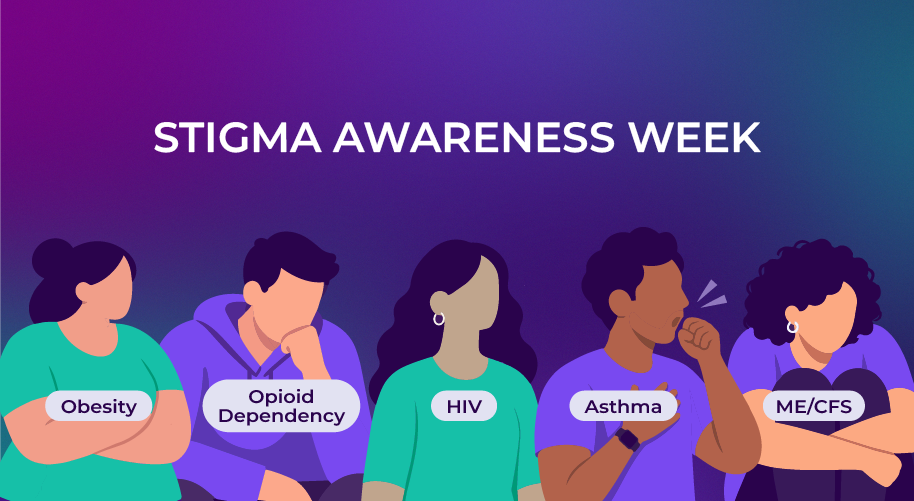
Next week, we’ll be exploring five different faces of stigma across five chronic conditions, from the highly visible to the easily overlooked, starting with blame in obesity. Join us throughout the week as we challenge how stigma shows up in healthcare, what it means for the people experiencing it, and whether we’re doing enough to recognise and address it in the care, communications and experiences we design.