
From Insights to Impact: Embedding Learning Systems into Commercial Strategy
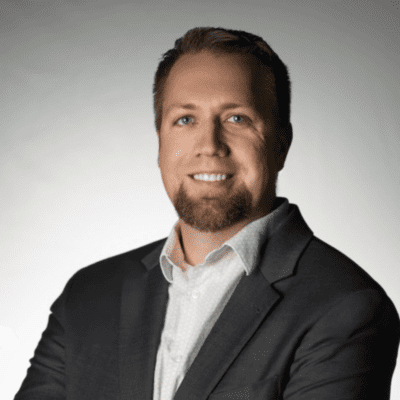 Chris Starr / 22 July 2026
By Chris Starr, Vice President Commercial, US
For decades, commercial strategy in pharma followed a familiar rhythm: annual planning cycles, fixed deployment models, and post-hoc performance reviews. Insights were gathered, documented, and often discussed but too rarely translated into immediate action.
That model no longer works.
Today’s healthcare environment is evolving too fast. Market access can shift mid-year. HCP engagement patterns change from quarter to quarter. Competitive pressure can intensify overnight. In this reality, commercial excellence is no longer about producing more insight; it’s about building learning systems that continuously convert insight into impact across the full product lifecycle.
From “learnings” to learning systems
When we talk about learning systems, we’re not talking about training platforms or static repositories of insight. We’re talking about something far more powerful: a living, adaptive commercial ecosystem where data, analytics, AI feedback, and field experience are continuously connected and evolving.
In leading organizations, learning systems bring together:
- Real-time performance data across channels
- Field insights captured at the point of HCP engagement
- Advanced analytics and benchmarking to identify what truly drives impact to a particular HCP considering their bespoke needs and personality
- AI-enabled feedback loops that translate insight into next-best actions
The goal isn’t more information. It’s faster decision-making and measurable change in execution.
This is where human-led, AI-powered commercial engagement becomes critical. Technology accelerates learning, but people determine how insight is applied in-market, ensuring relevance, compliance, and credibility with customers.
Commercial strategy as a living ecosystem
Increasingly, pharma organizations are treating commercial strategy not as a fixed plan, but as a living system that evolves with the market. Every interaction becomes a signal. Every signal feeds learning. Every learning informs the next action.
This represents a fundamental shift in mindset.
Instead of asking, “What did we learn last quarter?” high-performing teams ask, “What should we do differently tomorrow?”
That shift requires more than dashboards. It requires systems that close the loop between insight and execution ensuring that strategy, deployment, and optimization operate as one integrated commercial solution, rather than disconnected functions.
Closing the loop: Where insight meets execution
Closed loop learning is where insight becomes operational. It’s the integration of analytics, performance benchmarking, and AI-driven feedback directly into day-to-day commercial activity.
Behavioral and executional benchmarking helps teams understand not just what is happening, but why. AI-enabled analytics surface patterns across thousands of interactions that no individual could identify alone. Field feedback provides the essential context that data alone cannot.
When these elements work together, learning becomes continuous and execution becomes sharper with every cycle. Precision HCP engagement, powered by AI-driven segmentation and targeting, ensures that insight translates into action where it matters most.
Moving beyond annual planning
One of the biggest barriers to commercial agility is the persistence of annual planning as the primary decision framework. In an always-on market, annual plans age quickly.
The future of commercial excellence is defined by always-on evolution:
- Strategy adjusts in near real time
- Deployment models flex with market signals
- Coaching and optimization happen continuously, not episodically
This doesn’t mean abandoning planning discipline. It means augmenting it with learning systems that allow organizations to course-correct intelligently, without waiting for the next planning cycle.
Partnership-led commercial models are increasingly enabling this shift, giving organizations access to scalable analytics, executional insight, and optimization capabilities without hardwiring rigidity into their operating model.
Technology enables, people decide
AI and advanced analytics are powerful accelerators, but they are not substitutes for human judgment. The most effective learning systems are people-led, insight-driven, and technology-enabled.
AI identifies patterns. Analytics prioritize opportunities. But leaders and field teams decide how to act on balancing data with market nuance, regulatory requirements, and customer context.
When learning systems are designed well, they don’t overwhelm teams with insight. They focus attention on what matters most and empower people to act with confidence.
From insight to impact
Commercial excellence is no longer defined by how much insight an organization generates. It’s defined by how quickly and consistently that insight translates into better execution, stronger engagement, and better outcomes with sustained performance.
The shift from annual planning to persistent evolution is already underway. Organizations that embed learning systems into their commercial strategy will move faster, adapt smarter, and outperform those still relying on static models.
The future belongs to teams that treat learning not as an outcome, but as an operating system.
Ver más información de Inizio Engage.
Jump to a slide with the slide dots.

 Otto Simonsson
The New Commercial Playbook: Agile Teams for an Uncertain Market
Discover how agile deployment, modular commercialization, and outsourcing are helping pharmaceutical companies scale faster and adapt to change.
Leer más
 Pedro Del Valle
Beyond Launch: Sustaining Growth Through Continuous Optimization
Explore how continuous optimization, AI-powered insights, and agile commercial models help pharmaceutical companies drive growth beyond launch.
Leer más
 Dirk Szynka
Designing the Future of Engagement: Where Intelligent Field Forces Meet Experience-Led HCP Journeys
Discover how AI, customer experience, and intelligent field teams are reshaping HCP engagement strategies across the pharmaceutical product lifecycle.
Leer más