

When corporate comms fail to land
Deskless workers. They’re not behind a desk, staring at emails or pondering which Teams background to choose. They’re out there, 80% of the global workforce in fact, and yet they’re often the ones left out in the communications cold.
At Forty1, we work with companies that rely on these frontline superstars – lab technicians, factory operators, sales managers, retail assistants – to get the job done.
They’re more than just the backbone of their organizations, they’re the beating heart. Without them, these businesses would grind to a halt.
Deskless and disconnected – the real frontline challenge
Deskless workers are not your average desk-based employee. They rely on different cues and signals and – spoiler alert – they’re not spending their downtime browsing the staff intranet or reading company newsletters.
Research shows that 90% of the time, deskless workers are actually doing their job. Sure, productivity’s great, but this leaves a big question hanging in the air. How do you keep these workers engaged, connected and aligned with your mission when they’re not accessing the formal channels?
Relying on information cascades isn’t going to cut it. And, according to Gallup’s State of the Global Workforce Report, 59% aren’t engaged at work. It’s clear there’s work to do, so if you’re thinking about your deskless teams as an afterthought then that’s exactly how they’ll feel.
Why blanket comms miss the mark
Deskless workers aren’t a homogenous blob of people. The needs of a supply chain manager or sales assistant are miles apart. However, one thing’s clear, what works for corporate won’t work for deskless. Yet all too often, communication strategies take a one-size-fits-all approach.
If you’re relying on top-down messages and technology to build relationships, then you’re missing a trick. Relationships are built on trust, listening and action. And you can’t automate that.
Building trust and the power of listening
Trust isn’t a given. Especially with employees who might feel out of sight and out of mind. Building trust takes time, patience and a whole lot of listening.
To ensure deskless workers feel their contribution is valued, you need to tune into their needs and wants. What challenges are they facing? What motivates them? You can’t answer these questions with a cookie-cutter solution. To build meaningful connections, start by understanding your deskless workers’ perspectives.
Corporate comms can’t reach the frontline (but storytelling can)
By definition, deskless workers are further away from your communications mainframe, so it’s no surprise that the role of line managers is crucial. They are the interpreters of your message, but without the right tools and skills to authentically connect with frontline teams then Houston, we have a problem.
Here’s the thing – deskless workers are busy. They don’t have the time or headspace to trawl through corporate updates. The secret to connecting with deskless teams is storytelling. A well-told story fosters pride, engagement and a sense of purpose. So next time you roll out a comms update, ask yourself: “Can this be told as a story?”. If not, it might be falling flat.
Time for a check-in
You’re almost there – but before you jump onto your next gig spend just a few minutes reflecting on the following questions:
- Are your communication channels designed with deskless workers in mind?
- When was the last time you asked your deskless employees for feedback—and more importantly, how are you responding to what they’re telling you?
- Do your line managers have the training and tools they need to foster genuine connections with their teams?
- Are you using data to shape your engagement strategies, or are you still winging it?
Let’s bridge the gap
If you’re scratching your head, wondering how well your current strategies are performing, don’t worry – you’re not alone. The good news is that we can help.
At Forty1, we’ve worked across industries to engage deskless teams, build trust, and foster that all-important sense of belonging. When your workers feel seen, heard, and valued, they’ll proudly fly the flag for your company.
So, if you’re ready to strengthen those connections and make your deskless teams feel part of the bigger picture, get in touch. It’s time to close that gap, one meaningful conversation at a time.
Ver más información de Inizio Engage.
Jump to a slide with the slide dots.

Colin Melville Recognized in PM360’s 2026 ELITE 100 Awards for Disrupting Healthcare Storytelling
Colin Melville has been recognized in PM360’s ELITE 100 Awards for disrupting healthcare storytelling through generative AI and creative innovation.
Leer más
Nazaré Launches AI Academy to Help Businesses Upskill and Adopt AI with Confidence
Nazaré launches AI Academy, helping organizations build AI skills, boost adoption, and turn AI investment into measurable impact.
Leer más
 Hannah Parkinson
Seeing our world through smaller eyes: A first for Inizio Engage XD UK
See how Inizio Engage XD celebrated its first UK Bring Your Kids to Work Day, welcoming 70+ children for a day of creativity, learning and family fun.
Leer más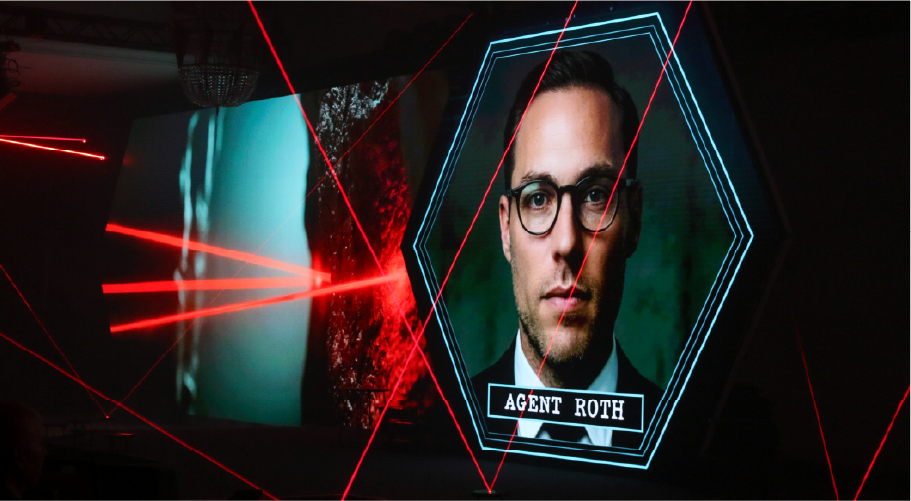
Bringing AI cinema to the conference stage
Discover how XD Film used AI-generated cinema, immersive staging and live production to transform AstraZeneca’s 2026 National Sales Meeting into a...
Leer más
When film becomes an immersive experience
Discover how XD Film transformed Arup’s 80th anniversary into an immersive film experience at The Lightroom, combining projection, animation and...
Leer más