
Could your next brand film be a Hollywood blockbuster?
 Colin Melville / 4 December 2025
Originally published by The Drum on December 3, 2025
We need to talk about the ‘corporate video.’ You know exactly the one I mean. It opens with a generic time-lapse of a city at night. It cuts to a slow-motion handshake in a glass-walled office. Then, inevitably, we see the motion graphics – usually a spinning strand of DNA or a global map with animated lines – that look like they were built in PowerPoint c.2008.
If you work in healthcare, pharma, or deep tech, this is likely your daily visual diet. And we have all just… accepted it. We have accepted that ‘business to business’ means ‘boring to boring.’
We didn’t stay in this aesthetic rut because we were lazy. We stayed there because we were broke. Until recently, if you wanted to visualize the future of sustainable energy, you had to settle for a stock clip of a wind farm. If you needed to show a global supply chain, you got a flat 2D map. To do anything more – to show a solarpunk metropolis in the year 2050, or to shrink the camera down to the size of an atom to ride a blood cell – required a Hollywood VFX budget that most B2B brands simply didn’t have.
But that era is over. As head of AI film at Emota (part of Inizio), I am watching that wall crumble in real time. We are currently living through the death of the ‘unfilmable.’
From science to cinema
The most exciting thing about generative video isn’t the efficiency or the cost savings, though those are real. It is the ability to take a client anywhere in time and space.
I sit in rooms with innovators who are building things that don’t exist yet. They have the research, the clinical data, and the breakthrough science. But they don’t have the footage. How do you film a cell therapy that hasn’t been approved? How do you capture a molecular interaction happening in real time? How do you show the impact of a climate technology that won’t be built for another decade?
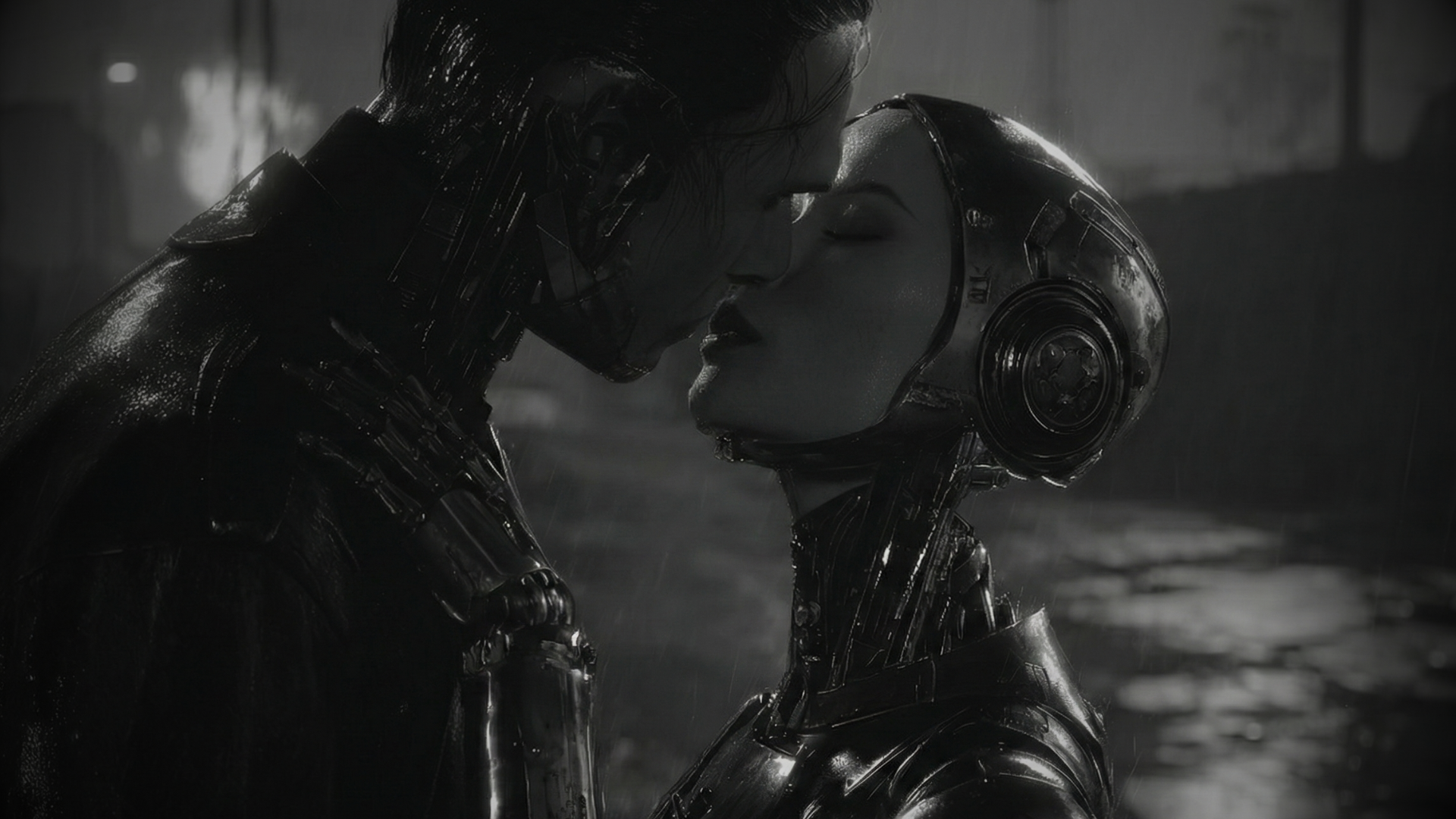
In the past, we defaulted to abstract voiceovers and maybe some optimistic CGI if the budget stretched. Now? We build the world. If a pharma client is developing a gene therapy, I don’t need microscopy footage that doesn’t exist. I can generate a photorealistic, cinematic journey inside the human body. We can create a period piece from the 1920s to show the gritty history of vaccine development, then cut instantly to a hyper-futuristic 2100 vision of personalized medicine.
This is the philosophy of ‘science to cinema.’ We are swapping the lecture hall for the movie theater. That isn‘t dumbing down the science; it is finally doing it justice.
Entertainment is a strategic asset
There is often a hesitation among healthcare and tech clients that ‘cinematic’ implies ‘frivolous.’ There is a deep-seated worry that if a video looks too good, physicians, investors, or regulators won’t take it seriously. They cling to the safety of the white paper and the talking head.
But human psychology argues the opposite. We are wired for narrative. We remember stories, not statistics. Even the most serious oncologist or the most technical CTO goes home at night and watches Netflix. They respond to lighting, composition, and drama just like everyone else.
When you treat a mechanism of action video with the visual gravity of a Christopher Nolan film, you aren’t showing off. You are respecting your audience’s time. You are saying: this science matters enough to be beautiful.
Here is the uncomfortable truth: if your audience is bored, they aren’t learning. Entertainment is the delivery system for education. A stunning visual journey through the immune system will teach more than a dozen static diagrams because people will actually watch it. They will share it. They will remember it.
The new mandate for agencies
I have seen the shift in the room when clients see their dry data translated into high-end imagery. It stops being a ‘deliverable.’ It becomes a vision. The scientists working on these projects suddenly look like the protagonists of their own epic.
This shift puts the pressure squarely on us – the marketers, the agencies, and the filmmakers. We can’t hide behind budget constraints anymore. The tools to build worlds are sitting on our laptops. The barrier to entry has shifted from budget to taste.
The challenge now is getting clients to be brave. We need to push them to leave the safety of the stock footage boardroom and embrace something stranger. We can visualize the microscopic, the telescopic, and the temporal. We can turn a quarterly report into a time-traveling journey.
The era of ‘good enough’ corporate content is dead. If you have the science, we have the cinema. Let’s make something people actually want to watch.
Ver más información de Inizio Engage.
Jump to a slide with the slide dots.
The talent behind the talent: Lisa Mead
In this edition of The Talent Behind the Talent, we’re spotlighting Lisa Mead, a Recruitment Executive with a growing global perspective and a passion
The Value of Leading by Example in 2025: A Canadian Perspective on Evolving Leadership
Leading by example in 2025: Discover how authentic, flexible, people-first leadership empowers hybrid teams and drives thriving workplaces.
The talent behind the talent: Julie Booth
In this edition of The Talent Behind the Talent, we’re spotlighting Julie Booth, UK Talent Acquisition Lead at Inizio Engage.